Netflix’s Hyderabad GCC
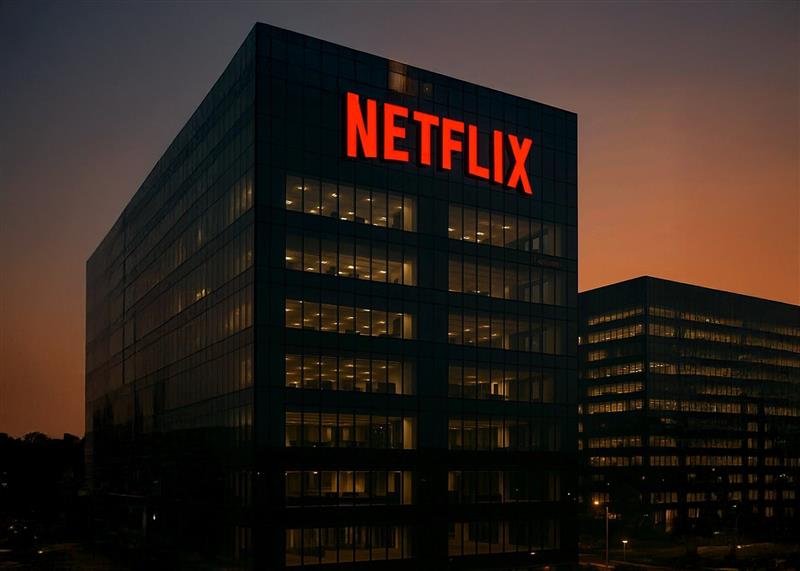
Building the Technology Backbone of Global Streaming
As global streaming platforms scale their production pipelines across continents, technology infrastructure has become as critical as storytelling. Netflix’s decision to establish a Global Capability Centre (GCC) in Hyderabad marks a significant milestone in India’s evolution from a content market to a strategic technology hub for global entertainment.
Located in the city’s HITEC City technology corridor, the new facility focuses on post-production, visual effects and content engineering—strengthening India’s role in the future of global streaming workflows.
Netflix’s Hyderabad GCC: Engineering the Next Global Content Pipeline
The global streaming industry is undergoing a profound transformation. Platforms such as Netflix are no longer simply distribution channels for films and television shows—they have become technology-driven ecosystems that integrate production, post-production, data analytics and global content delivery.
In this context, Netflix’s decision to establish a Global Capability Centre (GCC) in Hyderabad represents a strategic shift in how the company builds and manages its global production infrastructure.
The facility, located in Hyderabad’s HITEC City technology district, spans roughly 40,000–41,000 square feet and serves as Netflix’s second operational base in India after Mumbai.
More importantly, the centre highlights India’s growing importance in the global streaming economy—not just as a market for subscribers but as a key technology and production hub.
India’s Strategic
Importance in Netflix’s Global Expansion
India has rapidly
emerged as one of the most important markets for global streaming platforms.
With more than a
billion potential viewers, a vibrant film industry and a rapidly growing OTT
ecosystem, the country offers both scale and creative diversity.
Over the past
decade, Netflix has invested heavily in Indian content across multiple
languages, including Hindi, Tamil, Telugu and Malayalam productions.
However, the
company’s strategy is now evolving beyond commissioning content to building
deeper technological capabilities within the country.
The Hyderabad GCC
represents this next phase of investment.
The centre
complements Netflix’s Mumbai office—which focuses on content commissioning,
partnerships and marketing—by adding a strong technology and post-production
component to the company’s India operations.
Together, the two
hubs create an integrated operational model capable of supporting the entire
lifecycle of content production and delivery.
Why Hyderabad?
Netflix’s decision to
choose Hyderabad rather than other Indian technology centres reflects the
city’s rapid rise as a global hub for digital media and entertainment
technology.
Over the past
decade, Hyderabad has developed a strong ecosystem spanning animation, visual
effects, gaming and technology services.
The city already
hosts major global media companies and creative technology firms, making it an
ideal location for a streaming platform’s technology operations.
Industry reports
indicate that Netflix leased approximately 41,000 square feet of office
space in CapitaLand International Tech Park in the heart of HITEC City, a
major technology cluster that houses several multinational companies.
The choice of
Hyderabad was driven by several factors:
1. Strong AVGC
Ecosystem
Hyderabad has
emerged as one of India’s leading centres for the AVGC sector—Animation,
Visual Effects, Gaming and Comics.
The city hosts multiple global companies and creative studios working in
these fields, providing access to a large pool of specialised talent.
2. Technology
Infrastructure
HITEC City was
developed specifically as an IT and innovation corridor and now houses hundreds
of multinational companies across technology sectors.
This environment
provides high-speed connectivity, secure data infrastructure and collaborative
workspaces suited for global technology operations.
3. Government
Policy Support
The Telangana
government has actively promoted Hyderabad as a global hub for media technology
and digital entertainment.
Industry-friendly
policies and investments in the AVGC sector have helped attract international
companies to the city.
Inside the
Netflix Global Capability Centre
While details of Netflix’s
internal operations remain confidential, industry reports suggest that the
Hyderabad GCC will serve as a technology and post-production hub supporting the
company’s global content pipeline.
The facility is
expected to house a combination of engineering teams, creative technology
specialists and post-production professionals.
Key operational
areas include:
Post-Production
Workflows
The centre will
support post-production activities including editing coordination, finishing
workflows and project management for Netflix productions.
As streaming series
increasingly adopt cinematic production values, post-production has become a
major component of the content pipeline.
Visual Effects
and Animation
The Hyderabad hub is
also expected to manage VFX pipelines and collaborate with external visual
effects studios.
The growing
complexity of streaming productions—particularly fantasy, action and science
fiction series—has significantly increased demand for visual effects.
Content
Technology Engineering
Streaming platforms
rely on a sophisticated technology stack to manage production assets, editorial
workflows and global content distribution.
Engineering teams at
the GCC will work on internal tools that support these workflows.
Production
Operations
The centre will also
coordinate production vendors and partners across India’s diverse regional film
industries.
India produces
content in multiple languages and formats, making operational coordination a
critical function.
The Technology
Behind Global Streaming
Behind every Netflix
series lies a complex network of digital systems that manage the entire content
lifecycle—from development to global distribution.
Facilities such as
the Hyderabad GCC play a key role in supporting these workflows.
The streaming
production pipeline typically includes several technology layers:
Digital Asset
Management
Every production
generates thousands of digital assets including raw footage, sound files and
visual effects elements.
Cloud-based asset
management systems track and organise these files across the production
pipeline.
Cloud
Collaboration
Editors, VFX artists
and sound designers often work across multiple countries.
Cloud-based
workflows allow teams to collaborate on projects in real time.
Content Security
Systems
Streaming platforms
invest heavily in digital security infrastructure to protect unreleased content
from piracy.
Secure editing
environments and encrypted data systems are critical components of the
workflow.
Content
Optimisation and Analytics
Netflix also relies heavily
on data analytics to understand viewer behaviour and optimise content delivery.
Engineering teams
continuously refine algorithms that power recommendations and streaming
quality.
Hyderabad’s Rise
as a Media Technology Hub
Netflix’s investment
is part of a broader trend that is transforming Hyderabad into a global centre
for media technology.
The city already
hosts several major companies in the animation, gaming and visual effects
sectors.
Industry leaders
such as Warner Bros. Discovery and Electronic Arts have operations in the
region, creating a growing cluster of media technology firms.
The arrival of
Netflix further strengthens this ecosystem.
By locating its GCC
in Hyderabad, the company is effectively embedding itself within an emerging
network of production studios, VFX vendors and technology providers.
This clustering
effect often accelerates innovation by encouraging collaboration between
companies.
Impact on India’s
Broadcast and OTT Industry
The establishment of
Netflix’s Hyderabad GCC carries several implications for the Indian media
industry.
Strengthening
Local Production Infrastructure
With more advanced
post-production capabilities available domestically, Indian producers can
complete high-end workflows without relying on overseas facilities.
This reduces costs
and improves production efficiency.
Expanding
Employment Opportunities
The centre is
expected to create new roles in fields such as VFX, animation, software
engineering, digital media operations and data analytics.
These jobs will
contribute to the growth of India’s creative technology workforce.
Supporting
Regional Content Creation
Hyderabad’s
proximity to the Telugu film industry—one of India’s most dynamic production
centres—makes it an ideal base for regional content development.
The GCC could play
an important role in expanding Netflix’s collaboration with South Indian
filmmakers.
The Rise of Media
GCCs
Netflix’s Hyderabad
centre also reflects a broader corporate trend: the rapid growth of Global
Capability Centres.
Traditionally
associated with sectors such as banking and IT, GCCs are now increasingly
appearing in the media and entertainment industry.
These centres
typically support:
-
engineering and technology
- development
production operations
- data analytics
- digital infrastructure management
For streaming
companies, GCCs enable global workflows while tapping into specialised talent
pools.
India has become one
of the world’s largest destinations for such centres, and media companies are
beginning to follow the same model.
The Future of
Streaming Infrastructure
As streaming
platforms continue to compete globally, technology infrastructure will play an
increasingly central role in content creation.
Future production
pipelines are likely to incorporate:
-
AI-assisted editing and visual effects
- virtual production environments
- real-time global collaboration
- advanced cloud-based post-production
systems
Facilities like
Netflix’s Hyderabad GCC could become key nodes in this global network.
For India, the
implications are profound.
The country is
gradually evolving from being primarily a content production hub to becoming a
major centre for entertainment technology innovation.
A New Chapter in
India’s Streaming Ecosystem
Netflix’s Hyderabad
GCC represents more than just an expansion of office space.
It is a strategic
investment in the technological foundations of global storytelling.
By integrating
post-production, engineering and creative technology capabilities within India,
Netflix is strengthening its ability to produce and deliver content at global
scale.
For the Indian
broadcast and film industry, the message is clear.
The future of
entertainment will be driven not only by creative talent but also by the
technology ecosystems that enable content to be produced, processed and delivered
worldwide.
And increasingly,
those ecosystems are being built in India.
Sidebar: Netflix
Hyderabad GCC – Key Facts
-
Location: HITEC City, Hyderabad
- Facility size: ~40,000–41,000 sq ft
- India offices: 2 (Mumbai and Hyderabad)
- Focus areas: VFX, post-production,
content technology
- Sector: AVGC (Animation, VFX, Gaming,
Comics)
- Role: Global capability centre
supporting Netflix’s content pipeline