Prime Video’s India Playbook: How a High-Growth Market is Shaping Global Streaming Strategy
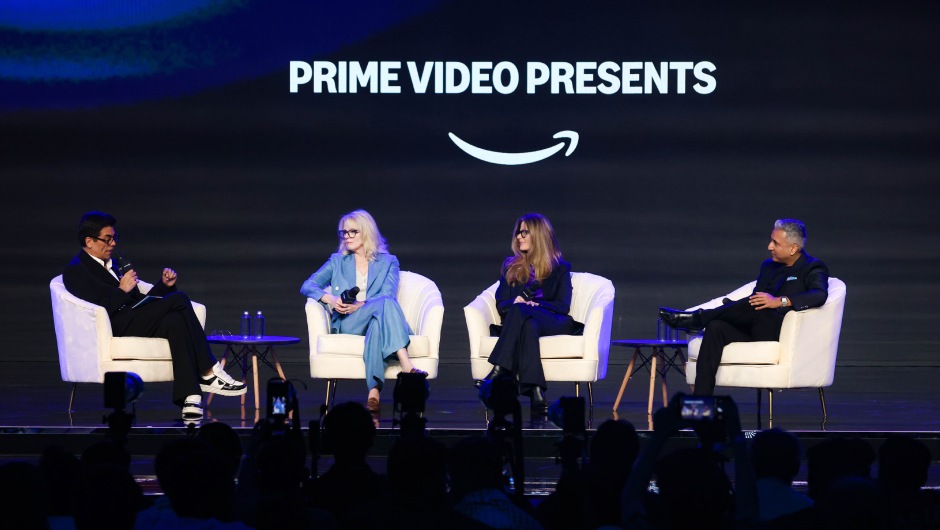
At its 2026 showcase, Prime Video made one thing clear: India is no
longer just a priority market—it is a strategic cornerstone of its global
ambitions. In a wide-ranging fireside conversation featuring Kelly Day, Nicole
Clemens and Gaurav Gandhi, moderated by Karan Johar, the company outlined how
India is driving innovation across content, monetisation, and international
expansion.
India’s evolution within
Prime Video’s global ecosystem reflects a broader shift in the streaming
landscape. What was once viewed as a high-potential, price-sensitive market has
now emerged as a critical growth engine, innovation hub, and content exporter—influencing
strategy far beyond its borders.
India at the Core of Prime
Video’s Global Strategy
At the heart of this
transformation lies a combination of scale, diversity, and engagement. India
represents one of Prime Video’s largest and most dynamic audiences, with deeply
varied linguistic and cultural segments.
This diversity has translated into a
robust Originals ecosystem spanning Hindi, Tamil, Telugu and other regional
languages—positioning India as one of the platform’s most significant content
markets globally.
Yet, the real inflection
point lies in the global resonance of Indian stories. Today, approximately 25%
of viewership for Indian Originals originates from outside the country,
signalling a decisive shift in how local content travels. Series such as The
Family Man, Mirzapur, Paatal Lok, and Farzi are no
longer domestic successes alone—they are part of a growing catalogue of
exportable intellectual property competing alongside Korean dramas, European
thrillers, and Japanese anime in global consumption patterns.
This exportability aligns
with Prime Video’s broader content thesis, articulated by Nicole Clemens:
authentic, culturally specific storytelling anchored in universal themes
travels best. In this framework, language is no longer a barrier; rather,
authenticity becomes the differentiator. The rising global appetite for
non-English content—from Spanish films to German series and Korean dramas—has
only reinforced this shift, placing Indian storytelling in a strong position to
scale internationally.
At the same time, Prime
Video’s India strategy stands out for its multi-layered monetisation model,
which departs from the traditional single-revenue streaming approach. The
platform operates across subscription (SVOD), rentals (TVOD), and ad-supported
(AVOD) ecosystems, creating a flexible consumption environment tailored to
diverse audience segments. In India, this includes the integration of Amazon MX
Player as a free, ad-supported platform, alongside premium subscription
offerings and a well-established movie rental marketplace.
Equally significant is the
innovation in pricing and accessibility. India has pioneered tiered
subscription models—from mobile-only plans to lighter Prime bundles—that have
expanded the platform’s reach across income segments. These experiments are no
longer localised solutions; they are increasingly being adapted for other
global markets, underscoring India’s role as a testing ground for scalable
business models.
Looking ahead, Prime Video’s
strategy in India is defined by four clear priorities.
First, expanding access
remains central. Despite significant growth, the platform sees substantial
headroom in reaching new users across geographies and demographics. Flexible
pricing, broader distribution, and hybrid viewing models will continue to drive
adoption.
Second, the company is
doubling down on globalising Indian content. With day-and-date releases across
more than 240 countries and enhanced localisation efforts through dubbing and
subtitling, Prime Video is actively positioning India as a global content
export hub.
Third, there is a strong
focus on building a sustainable IP and franchise ecosystem. Over 60% of its
Original series in India have already extended into multiple seasons,
reflecting both audience loyalty and long-term storytelling potential. The
emphasis now is on scaling this into a continuous pipeline—creating new
franchises while expanding existing ones. Emerging titles and genres, including
young adult (YA) content and high-concept storytelling like the upcoming Kalyug
Warriors, point to a deliberate push into underpenetrated segments.
Reinventing the Movies
Business for Streaming
Finally, Prime Video is
redefining its movies business in India. Moving beyond content licensing, the
platform is investing in co-productions and original theatrical releases under
the Amazon MGM Studios banner, with films transitioning to streaming
post-release. Simultaneously, it continues to strengthen its transactional
video-on-demand (TVOD) offering, recognising the sustained demand for movie
rentals in the Indian market.
What emerges from this
strategy is a nuanced understanding of India—not just as a volume-driven
market, but as a complex, multi-layered ecosystem capable of shaping the future
of streaming. The interplay of affordability, accessibility, content diversity,
and global ambition has created a model that is both locally relevant and
globally scalable.
For Prime Video, India is
still an evolving story. Despite nearly a decade in the market, executives
emphasise that the opportunity ahead remains vast. With increasing internet
penetration, rising digital consumption, and a maturing creator economy, the
next phase of growth will likely be even more transformative.
In many ways, India has
become more than just a market for Prime Video—it is a blueprint. A blueprint
for how streaming platforms can balance scale with specificity, premium
storytelling with accessibility, and local relevance with global reach.